
Village Hearth Project
Tourism that stays where you travel.
Every Trailblazer trip is built around a local community - not as a backdrop, but as the point.
What Village Hearth actually means.
Most tours route money through a travel company, which routes some of it to local operators, who pay guides a salary. By the time value reaches a rural community, it's been through three or four intermediaries.
Village Hearth is a different model. The local home is the anchor of the trip. Local families provide accommodation. Local people cook the meals. Guests buy goods directly from the artisans they meet in workshops.
This isn't charity. It's how we think travel should be structured economically. Communities don't need donations - they need customers who show up and pay fairly.
10+
Local households supported per trip
100%
Accommodation payments direct to families
3
Active Village Hearth communities
$0
Commissions paid to third-party operators
The people behind the trips.
Our local champions are real people with real stories. Meeting them is the point of the trip, not an add-on.
Impact
10+ households supported per trip
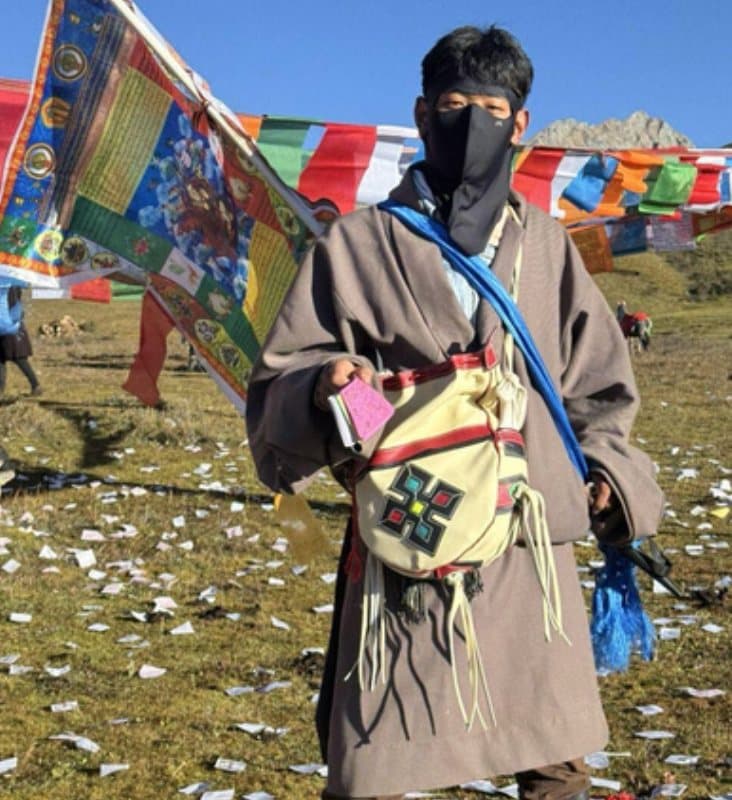
Tibetan herder & guide · Ge'nie Massif, Sichuan
Dorje
We met Dorje when he was 17, on a scouting trip through the Ge'nie region. He'd been herding yaks his whole life and had never guided tourists.
We didn't hire him immediately. We came back the following year, spent more time in the area, and gradually a genuine friendship developed. Six years later, he runs the Village Hearth operation for our Tibetan Plateau route.
His home is the base. His family provides the meals. The accommodation payments go directly to his household - and to the neighbouring families who host overflow guests. A single Trailblazer group supports more than ten households.
He speaks Tibetan, Mandarin, and enough English to make everyone laugh. He also has strong opinions about the correct way to make yak butter tea.
Impact
Village women earning 10,000+ RMB / year
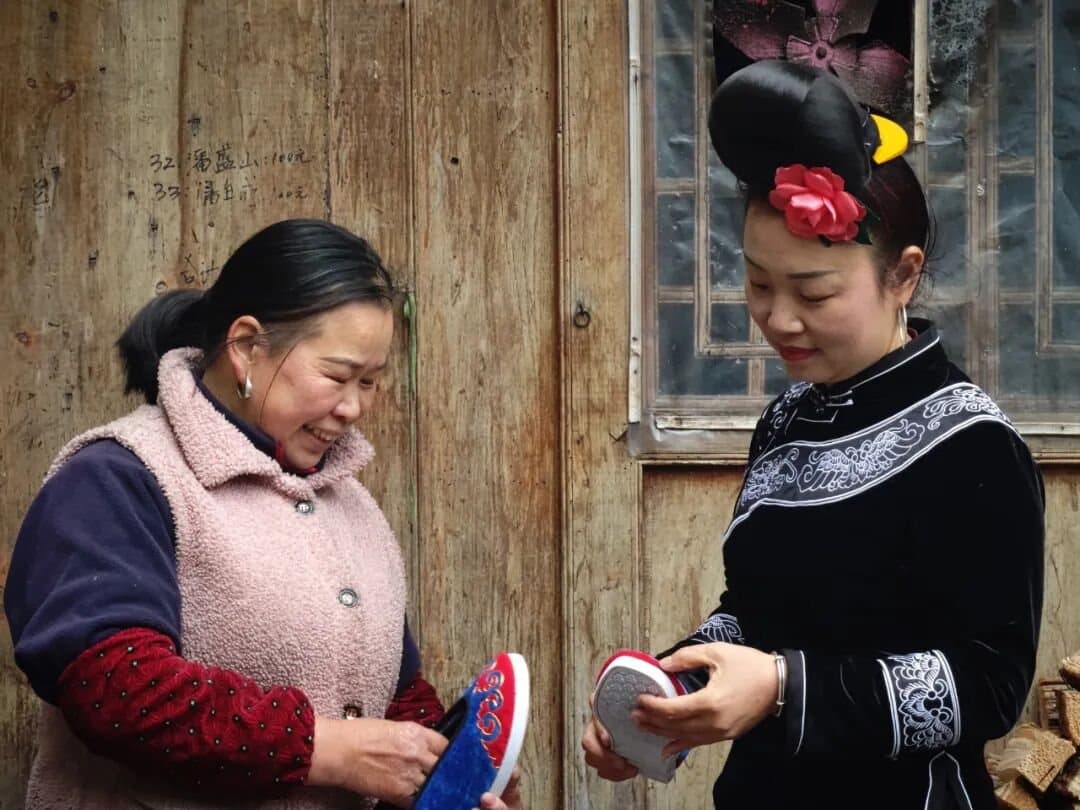
Village doctor & embroidery teacher · Jidao, Guizhou
Chen Qin
Chen Qin is the village doctor of Jidao - which means she already has a full-time job. She also converted her own home into a free embroidery training base for the women in her village.
Before the training base, these women had no independent income. Miao embroidery is a sophisticated skill - specific symbols carry historical meaning, specific techniques take years to master - but it had been economically invisible.
Chen Qin changed that. Women who trained at her base now earn over 10,000 RMB a year from their craft. Some have sent children to graduate school. She will tell you this matter-of-factly, as if it's obvious. It took us a few visits to fully appreciate what she'd built.
On our Guizhou trips, guests spend an afternoon at her training base - not watching, but participating. Learning to identify the symbols, understanding the history they encode.
Impact
Primary breadwinner, two children in graduate school
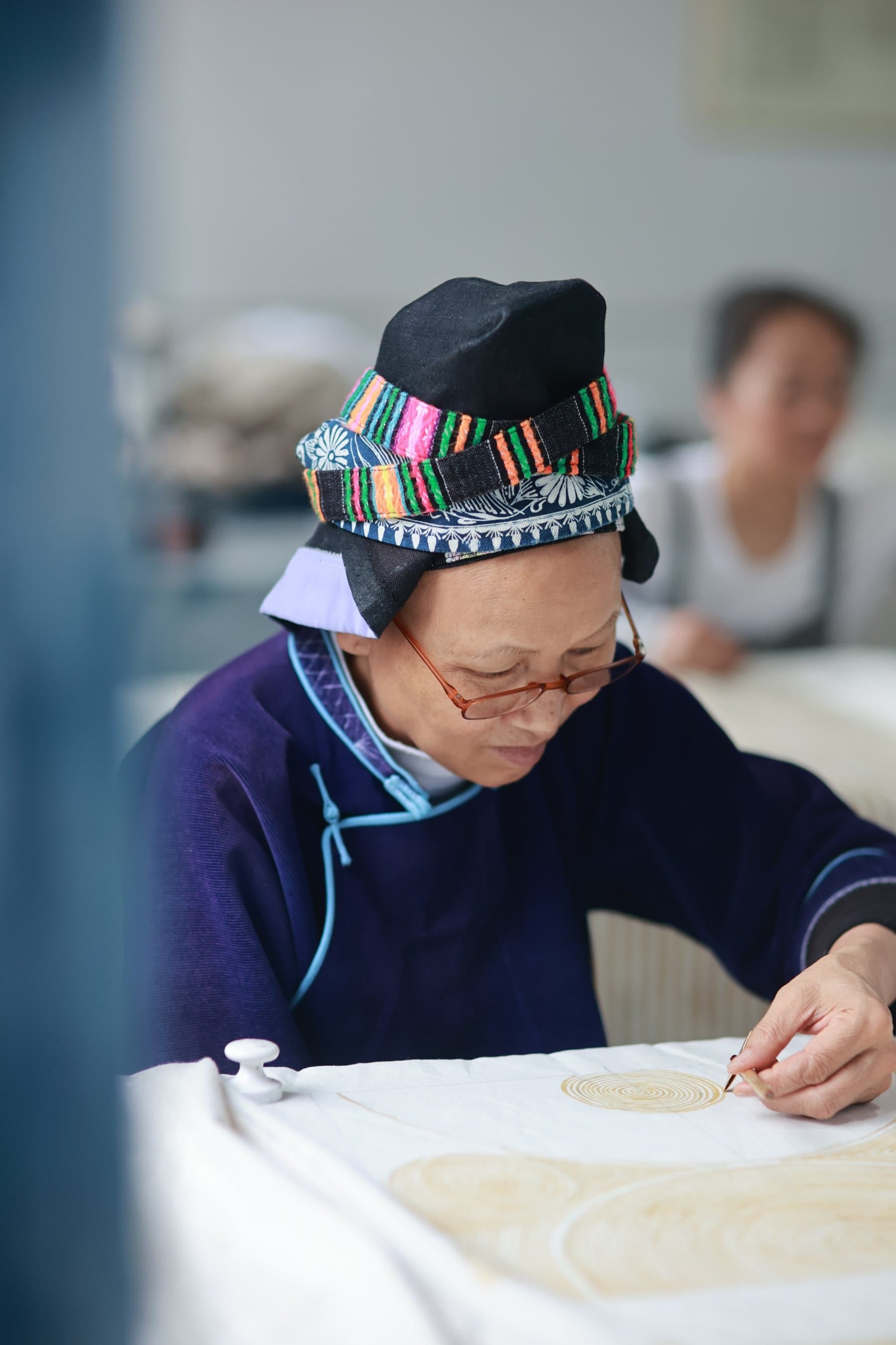
Batik artist · Danzhai, Guizhou
Yang Erlang
Yang Erlang lost her right arm at 40 in an accident. She had been a batik artist her whole life - natural indigo, wax-resist technique, the kind of patterns that take a lifetime to master.
She taught herself to work with her left hand. It took years. She is now one of the most technically accomplished batik artists in Danzhai, and the primary breadwinner for her family. Two of her children have gone to graduate school.
Her story isn't something we lead with. It's something guests often only find out halfway through the workshop, when they ask how long she's been doing this.
She finds the admiration a bit excessive. She was good at her craft. She adapted. She kept going. That's the story, as far as she's concerned.
Impact
Professional fees to every musician & performer
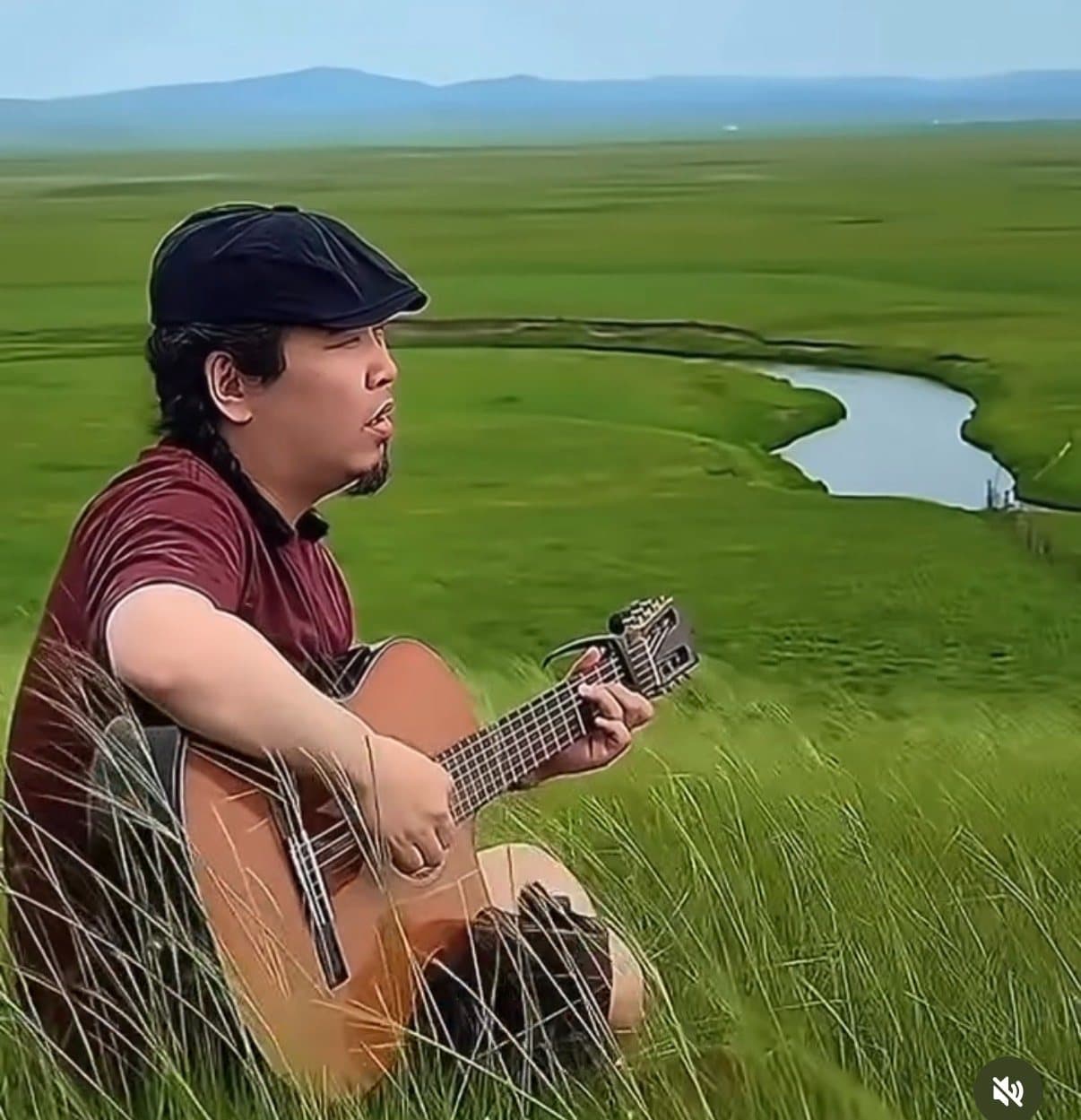
Musician & grassland host · West Ujimqin, Inner Mongolia
Hongguer
Hongguer studied art in the city. He learned to play modern instruments, developed a taste for contemporary music, and had every reason to stay in an urban career.
He came back to the grassland.
He runs a coffee shop on the steppe that is simultaneously a gathering point for nomadic herders, a rehearsal space for local musicians, and a cultural hub that wouldn't look out of place in Berlin. The combination makes perfect sense to him.
For our Inner Mongolia trips, Hongguer's involvement means that every performer at our private sessions - the throat singers, the Morin Khuur players, the wrestlers at Naadam - is paid professional fees. Not tips. Professional fees. The goal is to make it economically viable for talented people to stay on the steppe rather than migrating to cities.
Ready for a version of China that feels vivid instead of overwhelming?
Start with a route, or start with a conversation. We'll help you figure out where to go, what kind of pace suits you, and whether Trailblazer is the right fit.
Step 1
Tell us what kind of China trip you are imagining.
Step 2
We help you narrow the route, timing, and pace.
Step 3
You get a clear recommendation on what to do next.